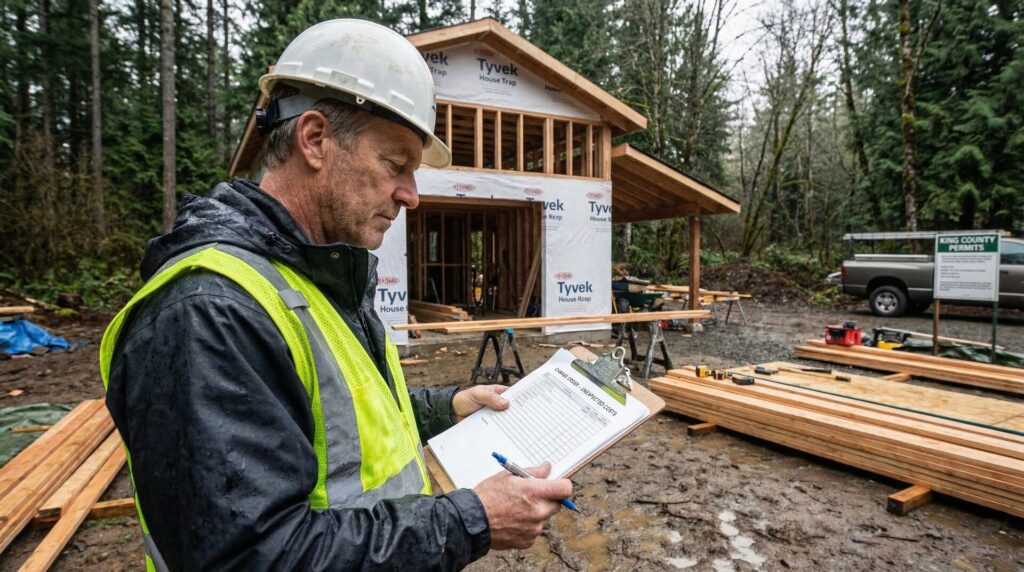
The Costs Nobody Warns You About
Every DADU cost guide covers the big-ticket items — foundation, framing, finishes, permits. But experienced builders know that the difference between a smooth project and a budget nightmare often comes down to the costs nobody mentions upfront. In King County, these hidden costs can add $30,000–$80,000 to a DADU project that seemed well-budgeted on paper.
This isn’t meant to scare you — it’s meant to prepare you. When you budget for these expenses from the start, they’re not surprises. They’re just line items.
Utility Upgrade Costs
Your primary home’s utility infrastructure may not be sized for an additional dwelling unit. Upgrades can be significant.
Electrical Panel Upgrade ($3,000–$8,000)
- Many older King County homes have 100-amp or 150-amp electrical panels
- Adding a DADU with its own subpanel may require upgrading your main panel to 200 amps
- This involves Puget Sound Energy coordination and can add 2–4 weeks to the schedule
Sewer Capacity Charges ($5,000–$20,000)
- Some sewer districts charge a “capacity charge” for adding a new dwelling unit — even if the physical connection already exists
- These charges vary significantly by district and can be a surprise if you don’t ask early
- See our sewer vs. septic guide for district-specific details
Water Meter ($3,000–$10,000)
- Some jurisdictions require a separate water meter for the DADU
- New meter installation includes the meter, backflow prevention, and connection fees
- Others allow sharing the existing meter — check your local utility requirements
Site Discovery Costs
Until you start digging, you don’t always know what’s under your yard.
Poor Soil Conditions ($5,000–$25,000)
- The geotechnical report may reveal soil that won’t support a standard foundation
- Solutions range from over-excavation and compacted fill ($5,000–$10,000) to engineered piling systems ($15,000–$25,000)
- This is why geotechnical reports are required — the cost of the report prevents far larger surprises
Buried Debris or Underground Tanks ($2,000–$15,000)
- Older King County properties sometimes have buried oil tanks, concrete, or construction debris
- Removal and disposal adds unplanned cost and time
- Oil tank decommissioning requires environmental testing and may trigger remediation
Rock and Hardpan ($5,000–$15,000)
- Parts of King County have shallow bedrock or dense glacial till
- Excavation through rock requires specialized equipment and significantly more time
- Utility trenching through rock is especially expensive
Tree-Related Costs
King County takes tree protection seriously, and the costs can add up.
Tree Protection Measures ($1,000–$5,000)
- Protection fencing around significant trees within the construction zone
- Arborist monitoring during excavation near root zones
- Modified construction techniques to avoid root damage
Tree Removal Permits and Replacement ($3,000–$15,000)
- Removing significant trees requires a permit and replacement planting
- Replacement ratios can be 2:1 or 3:1 (plant two or three new trees for each one removed)
- Large tree removal itself costs $2,000–$8,000 depending on size and access
Arborist Reports ($500–$2,000)
- Required when significant trees are within 15 feet of the construction zone
- May be required as part of the permit application
Temporary Living Costs
While your DADU construction shouldn’t displace you from your primary home, it does affect your daily life.
- Temporary fencing: $1,000–$3,000 for construction zone fencing during the build
- Temporary parking: If construction equipment blocks your driveway, you may need alternative arrangements
- Noise and disruption: Not a dollar cost, but factor in the quality-of-life impact during 4–8 months of construction
Insurance Costs
Your existing homeowner’s insurance may not automatically cover a new DADU.
- Builder’s risk insurance: $1,000–$3,000 during construction. Covers the structure against damage, theft, and fire while being built.
- Updated homeowner’s insurance: Adding a DADU to your policy increases your premium by $500–$1,500/year.
- Landlord insurance: If renting the DADU, you’ll want landlord-specific coverage — $500–$1,200/year.
- Umbrella policy: Consider increasing your umbrella coverage when adding a rental unit — $200–$500/year.
Permit and Process Costs
Beyond the base permit fees, the permitting process generates additional costs:
- Plan revision costs: $1,000–$5,000 if correction requests require design changes from your architect
- Additional studies: $2,000–$8,000 for drainage studies, traffic studies, or environmental assessments requested during review
- Re-inspection fees: $200–$500 per failed inspection that requires a return visit
- Notice on title recording: $100–$200 (minor, but often forgotten)
Read our permit mistakes guide to minimize these costs.
Post-Construction Costs
The surprises don’t end when construction finishes.
Landscaping Restoration ($5,000–$20,000)
- Construction equipment destroys lawns, garden beds, and sometimes trees
- Grading, new sod, replanting, and path restoration are significant expenses
- Budget more if your yard was extensively landscaped before construction
Fence Repair or Replacement ($2,000–$8,000)
- Fences along the property line near the construction zone often need removal for access
- Replacing or repairing fencing is rarely included in the construction contract
Driveway and Hardscape Repair ($1,000–$5,000)
- Heavy equipment can damage driveways, walkways, and patios
- Concrete repair or replacement adds unplanned cost
Ongoing Costs After Completion
Once your DADU is finished, there are new ongoing expenses:
- Property tax increase: Your assessed value will increase, raising annual property taxes by $2,000–$5,000+
- Utility bills: If utilities are shared, your bills increase. If separate, there’s a new account to manage.
- Maintenance reserve: Budget 1% of construction cost annually ($4,000–$6,500) for maintenance and repairs.
How to Protect Your Budget
- Budget a 10% contingency. On a $500,000 project, that’s $50,000 set aside for the unexpected.
- Get thorough site assessments. Geotechnical, survey, arborist — the upfront cost of these reports prevents far larger surprises.
- Ask about utility requirements early. Contact your sewer district, water utility, and electrical provider before finalizing your budget.
- Include post-construction costs in your financing. Landscaping, fencing, and insurance belong in your loan amount, not as afterthoughts.
- Work with an experienced builder. A builder who’s done dozens of King County DADUs has already encountered these costs and budgets for them.
APEX DADU: No Surprises
Our estimates include the costs that other builders leave out. APEX DADU provides comprehensive budgets that account for site conditions, utility requirements, tree impacts, and post-construction restoration — so the number you plan around is the number you finish with.
Get an honest, complete DADU cost estimate from APEX DADU

Leave a Reply