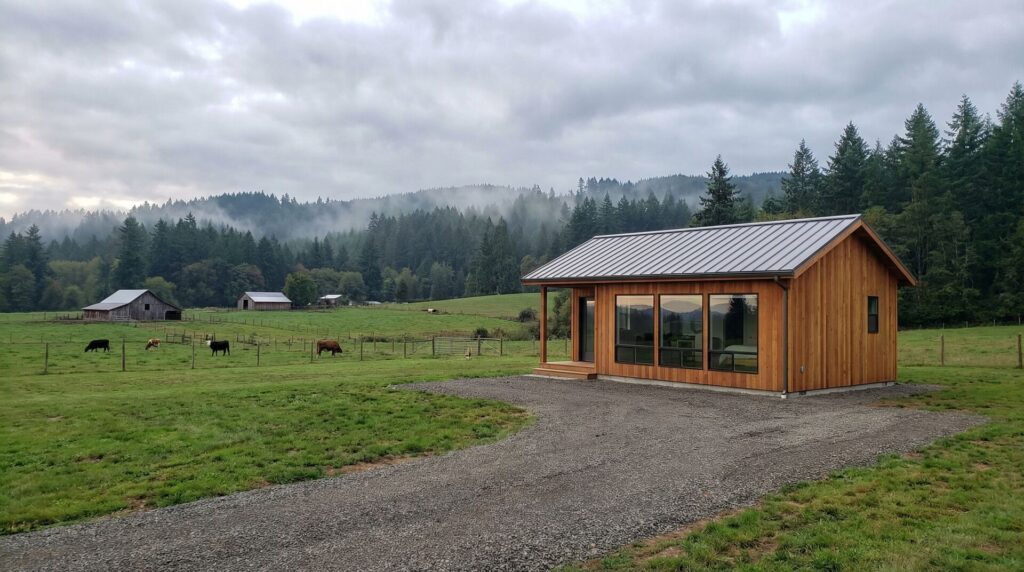
Rural DADUs: Different Rules, Different Opportunities
Building a DADU on a rural King County property comes with a different set of challenges and opportunities than urban construction. Larger lots provide more flexibility in DADU placement and design, but septic systems, well water, access requirements, and rural zoning create unique considerations that urban builders don’t face.
Rural Zone DADU Regulations
Rural King County zones (RA-2.5, RA-5, RA-10) have their own ADU rules:
- Maximum size: 1,000 square feet of heated floor area (same as urban)
- Two ADUs allowed per HB 1337
- Setbacks: Larger than urban — typically 10–30 feet from property lines depending on zone
- Height: Zone-specific limits apply
- Agricultural use: Properties with agricultural designations may have additional restrictions
For detailed zoning information, see our zoning rules guide.
Septic System Considerations
The biggest difference between rural and urban DADU projects is utilities — and septic is the biggest factor.
- System evaluation is mandatory: Before King County approves your DADU permit, your septic system must be evaluated for capacity
- Bedroom count drives capacity: Each DADU bedroom increases the required septic capacity
- Reserve area protection: Your DADU cannot be built on the designated reserve drainfield area
- Potential upgrades: If the existing system can’t handle the additional load, upgrades can cost $15,000–$50,000+
Well Water Considerations
Some rural properties use well water rather than public water supply:
- Flow testing: Your well must demonstrate adequate flow for the additional dwelling
- Water quality testing: Required to ensure the well produces potable water
- Pump capacity: May need upgrading if the well pump can’t serve both homes
- Shared or separate: The DADU may connect to the existing well or may need a separate well in some cases
Access and Emergency Services
- Fire department access: The DADU must be accessible to fire trucks — minimum driveway width and turning radius requirements apply
- Driveway length: Long driveways may require turnouts or turnarounds for emergency vehicles
- Address visibility: The DADU needs a visible address for emergency response
- Fire protection: Properties far from fire stations may need additional fire-resistant construction features
Critical Areas in Rural King County
Rural properties are more likely to have critical areas:
- Streams and fish habitat: Buffers of 50–200 feet may apply
- Wetlands: Common in low-lying rural areas
- Steep slopes: Many rural properties include hillsides
- Flood zones: River valleys and low-lying areas may be in FEMA flood zones
Construction Logistics
- Access advantage: Rural properties generally have better construction equipment access — wider driveways and more staging area
- Delivery feasible: Prefab DADU delivery is often easier on rural lots with good road access
- Utility runs: Long distances between the primary home and DADU location can increase utility connection costs
- Power supply: Some rural areas may need electrical service upgrades to support an additional dwelling
Rural DADU Costs
- Base construction: Similar to urban costs — $400,000–$650,000 all-in
- Septic upgrades: Add $15,000–$50,000 if needed
- Well upgrades: Add $5,000–$15,000 if needed
- Long utility runs: Add $5,000–$20,000 for extensive trenching
- Access improvements: Add $5,000–$15,000 for driveway or road improvements
Rental Market for Rural DADUs
Rural rental demand differs from urban:
- Lower monthly rents ($1,200–$2,200/month) but also potentially lower costs
- Tenants who value privacy, quiet, and outdoor space
- Longer average tenancy — rural renters tend to stay longer
- Less competition — fewer rental options in rural areas
- Potential for agricultural worker or caretaker housing
Tips for Rural DADU Projects
- Evaluate septic first. This is the number one make-or-break factor for rural DADUs.
- Check critical areas early. Rural properties have more environmental constraints — know what you’re dealing with before investing in design.
- Plan utility routes. Map the route from the primary home to the DADU location for all utilities — distance drives cost.
- Consider off-grid features. Solar panels, heat pump water heaters, and efficient design can reduce the DADU’s dependence on infrastructure.
- Design for the setting. Rural DADUs should embrace their environment — larger windows, outdoor living space, and natural materials.
APEX DADU Builds Rural Projects
We have experience building DADUs on rural King County properties with septic systems, wells, and unique site conditions. APEX DADU handles the additional complexity of rural construction — from septic evaluation through final landscaping.
Contact APEX DADU for your rural DADU consultation

Leave a Reply