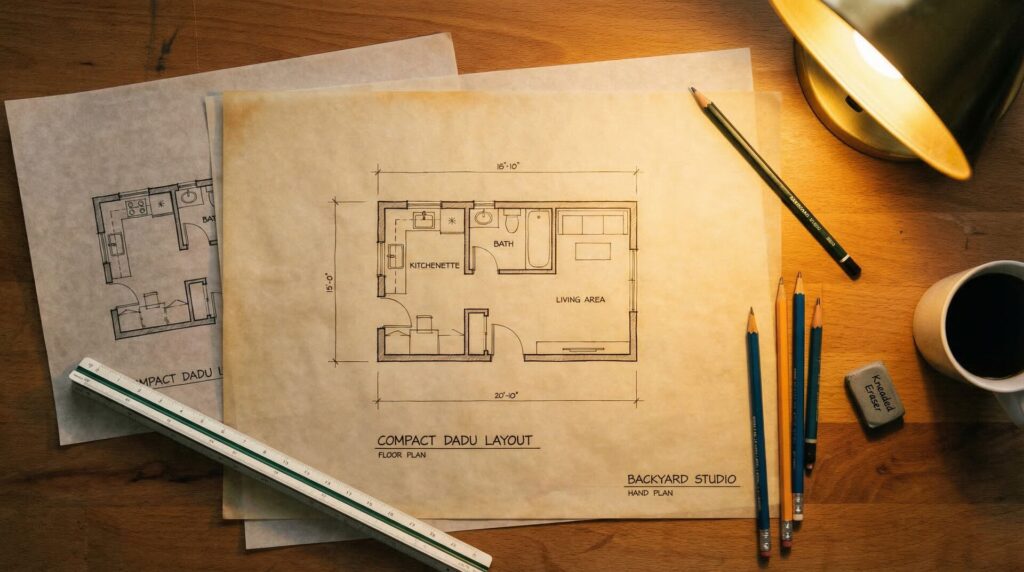
Small Lots, Smart Design
King County has thousands of residential lots under 5,000 square feet — particularly in older neighborhoods and denser urban zones. Building a DADU on these lots requires creative design that maximizes living space while meeting setback requirements, lot coverage limits, and building code. The good news: a well-designed DADU on a small lot can be just as livable as one on a sprawling property.
This guide covers the floor plan strategies that work best on King County’s smaller lots.
Working Within the Constraints
Before looking at floor plans, understand what limits your design on a small lot:
- Setbacks: 5-foot minimum from side and rear property lines in urban zones. On a 40-foot-wide lot, that leaves only 30 feet of width — minus any space occupied by the primary home’s footprint. See our setback guide.
- Lot coverage: The DADU footprint, primary home, garage, and all impervious surfaces must stay under the zone’s maximum (typically 45–70%).
- Maximum DADU size: 1,000 square feet of heated floor area. On small lots, you may not be able to use the full allowance due to setback and coverage constraints.
- Outdoor space: Preserving some usable outdoor area maintains your property’s livability and value.
The 400–500 Square Foot Studio
For the tightest lots, a studio DADU delivers a complete living unit in a compact footprint.
Layout Approach
- Open-concept living/sleeping area (200–250 sq ft)
- Galley or L-shaped kitchen along one wall (50–75 sq ft)
- Full bathroom with shower (40–50 sq ft)
- Entry and closet area (30–50 sq ft)
- Optional: Murphy bed or sleeping loft to free up daytime floor space
Footprint
- Single-story: 20′ x 25′ footprint (500 sq ft) — fits a buildable area as narrow as 20 feet
- Two-story: 15′ x 17′ footprint (255 sq ft) with 250 sq ft upstairs — dramatically reduces lot coverage
Best For
- Single tenants or couples
- Home office or studio space
- Short-term rental units
- Lots where coverage limits restrict the footprint to under 500 sq ft
The 600–700 Square Foot One-Bedroom
A one-bedroom DADU is the sweet spot for rentability — it commands significantly higher rent than a studio while keeping the footprint manageable.
Layout Approach
- Separate bedroom (120–150 sq ft) with closet
- Living area (150–200 sq ft)
- Kitchen with dining space (100–130 sq ft)
- Full bathroom (50–60 sq ft)
- Entry, hallway, and storage (50–80 sq ft)
Footprint
- Single-story: 24′ x 28′ (672 sq ft) — needs a buildable area at least 24 feet wide
- Two-story: 18′ x 20′ footprint (360 sq ft) with bedroom upstairs — excellent lot coverage efficiency
Best For
- Long-term rental tenants (most in-demand unit type)
- Adult children or aging parents
- Home office with separate living space
The 800–1,000 Square Foot Two-Bedroom
If your lot allows it, a two-bedroom DADU commands the highest rent and provides the most flexibility.
Layout Approach
- Primary bedroom (120–150 sq ft) with closet
- Second bedroom or flex room (100–130 sq ft)
- Living area (180–220 sq ft)
- Full kitchen with dining area (120–160 sq ft)
- Full bathroom (50–60 sq ft)
- Optional half bath (25–30 sq ft)
- Entry, storage, laundry closet (60–80 sq ft)
Footprint
- Single-story: 28′ x 32′ (896 sq ft) — requires a generous buildable area
- Two-story: 20′ x 25′ footprint (500 sq ft) with 500 sq ft upstairs — makes two bedrooms feasible on much smaller lots
Best For
- Small families
- Multigenerational family housing
- Maximum rental income potential
- Properties where the second bedroom serves double duty as guest room or office
Design Strategies for Small Lots
Go Up, Not Out
A two-story DADU cuts your ground-floor footprint nearly in half while maintaining full square footage. This is the single most effective strategy for small lots:
- Bedrooms upstairs, living spaces downstairs
- Reduces lot coverage, preserving outdoor space
- May require consideration of height limits and neighbor privacy
Back-to-Back Plumbing
- Place the kitchen and bathroom on opposite sides of a shared wall
- Reduces plumbing costs by $2,000–$4,000
- Keeps the “wet wall” compact and efficient
Built-In Storage
- Use wall niches, under-stair storage, and built-in shelving
- Eliminates the need for bulky furniture that consumes floor space
- Closet organizer systems maximize small closets
Multipurpose Spaces
- Dining counters that double as workspace
- Living rooms with Murphy beds for studios
- Built-in seating with storage underneath
Outdoor Living Extension
- A small covered porch or deck extends usable living space outdoors
- Pacific Northwest weather makes covered outdoor areas particularly valuable
- French doors or large sliding doors visually connect indoor and outdoor space
Floor Plan Mistakes to Avoid
- Wasted hallway space: In a small DADU, every square foot of hallway is a square foot that isn’t living space. Minimize halls with open floor plans.
- Oversized bathrooms: A well-designed 50 sq ft bathroom is comfortable. Don’t give it 80 sq ft at the expense of living space.
- Ignoring storage: Small spaces without adequate storage feel cluttered immediately. Plan storage into the design from day one.
- Poor natural light: Compact spaces feel much larger with good natural light. Prioritize window placement.
- Impractical kitchens: A DADU kitchen needs to be fully functional — full-size refrigerator, proper counter space, and a real range or cooktop.
APEX DADU Designs for Your Lot
We’ve designed DADUs on lots as small as 3,200 square feet across King County. APEX DADU starts every project with a detailed site analysis — mapping setbacks, coverage limits, and buildable area before designing a floor plan that maximizes space and livability for your specific property.
Contact APEX DADU for a custom floor plan consultation

Leave a Reply