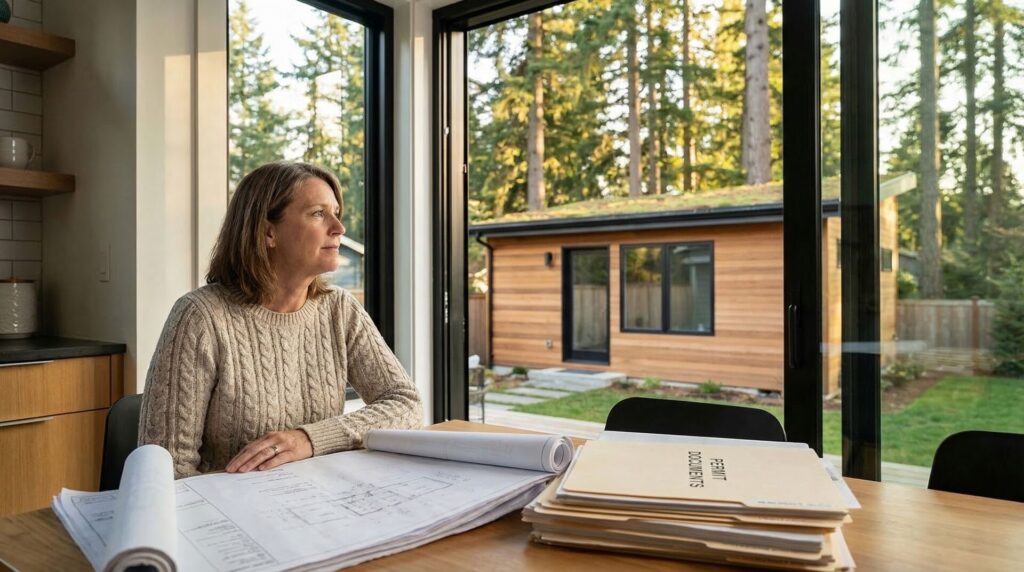
Before You Apply: Pre-Application Research
The single biggest mistake DADU applicants make is submitting before they’ve done their homework. A few hours of pre-application research can save you months of delays and thousands in redesign costs.
Verify Your Zoning
Use the King County Parcel Viewer to confirm your property’s zoning designation. Not all residential zones allow DADUs, and the rules differ between urban and rural areas. Your zone determines:
- Whether a detached ADU is permitted
- Maximum size and height limits
- Required setbacks
- Lot size minimums
Check for Restrictions
Even in zones that allow DADUs, your specific lot may have restrictions:
- Easements: Utility, drainage, or access easements on your title report
- Critical areas: Wetlands, steep slopes, landslide hazard zones, or flood plains
- Covenants: HOA or CC&R restrictions (note: Washington state law limits HOA ability to prohibit ADUs)
- Existing structures: You can have up to two ADUs, but only if there’s no more than one primary dwelling
Schedule a Pre-Application Conference
King County offers pre-application meetings where staff review your project concept and identify potential issues. This 30-minute investment can:
- Confirm your DADU is feasible before you spend on design
- Identify required studies (geotechnical, drainage, tree protection)
- Clarify which permit types you’ll need
- Give you specific reviewer expectations
Assembling Your Application Package
A complete application moves through review faster and with fewer correction rounds. Here’s the checklist:
Required for All DADU Applications
- Completed application form with owner signature
- Site plan (to scale) showing lot boundaries, existing structures, proposed DADU, setbacks, utilities, and access
- Architectural drawings: floor plans, all four elevations, building sections, and construction details
- Structural engineering calculations signed by a licensed PE
- Energy code compliance documentation (Washington State Energy Code)
- Proof of property ownership
- Application fees
Commonly Required Supplemental Documents
- Geotechnical report (slopes, known soil issues, or reviewer request)
- Drainage plan showing stormwater management
- Tree protection plan (significant trees within 15 feet of construction)
- Septic system evaluation (properties on septic)
- Sewer availability confirmation (properties on public sewer)
Submitting Your Application
For unincorporated King County, applications go through the MyBuildingPermit online portal. For incorporated cities, check the specific city’s building department website.
- Upload all documents in the required format (typically PDF)
- Pay application fees at submission
- Keep your confirmation number and track your application status online
What Happens During Review
Once submitted, your application goes through multiple review stages:
Intake Review (1–2 Weeks)
Staff checks that your application is complete. If anything is missing, you’ll receive a notice specifying what’s needed. Incomplete applications are returned and go to the back of the queue when resubmitted.
Multi-Department Plan Review (6–16 Weeks)
Your plans are reviewed by multiple departments simultaneously:
- Building: Structural adequacy, code compliance, energy code
- Zoning: Setbacks, lot coverage, height, and use compliance
- Fire: Access, smoke detection, and fire separation requirements
- Health: Sewer/septic adequacy (when applicable)
- Stormwater: Drainage and erosion control
Correction Requests
Most applications receive at least one round of corrections. You’ll receive a detailed letter listing items that need to be addressed. Common correction items include:
- Incomplete structural details or missing calculations
- Inconsistencies between the site plan and architectural drawings
- Energy code documentation gaps
- Setback clarifications
Respond quickly and completely. Each correction round adds 2–4 weeks. Partial responses that miss items trigger additional rounds.
Permit Issuance
Once all departments approve, your permit is issued. You’ll receive:
- The building permit document
- Approved plans (stamped)
- Inspection schedule and requirements
- Conditions of approval (if any)
Tips for a Smooth Application
- Hire experienced professionals. An architect and engineer who’ve done King County DADUs before know what reviewers expect.
- Be thorough at intake. A complete application on the first submission is the single biggest time-saver.
- Respond to corrections fast and completely. Don’t submit partial responses.
- Maintain communication. If reviewers request additional information, provide it promptly and ask if anything else is needed.
- Don’t start construction early. Working without an approved permit can result in stop-work orders, fines, and having to undo completed work.
APEX DADU Manages the Entire Process
The permit application process is where experience saves time and money. APEX DADU prepares complete, reviewer-ready applications for King County homeowners — and manages corrections and communication through final approval. We’ve done this enough times to know exactly what reviewers want to see.
Let APEX DADU handle your permit application

Leave a Reply